Power Adapter Docking Station Laptop Multifunctional Converter Splitter Accessories: A 2026 Specification Analysis
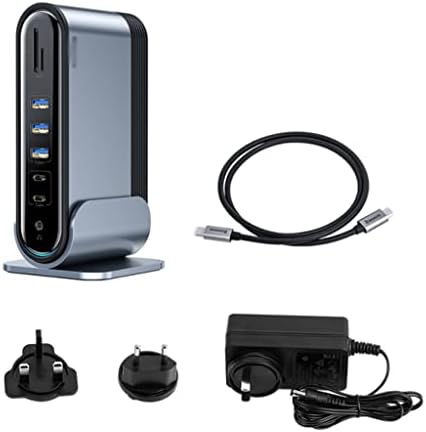
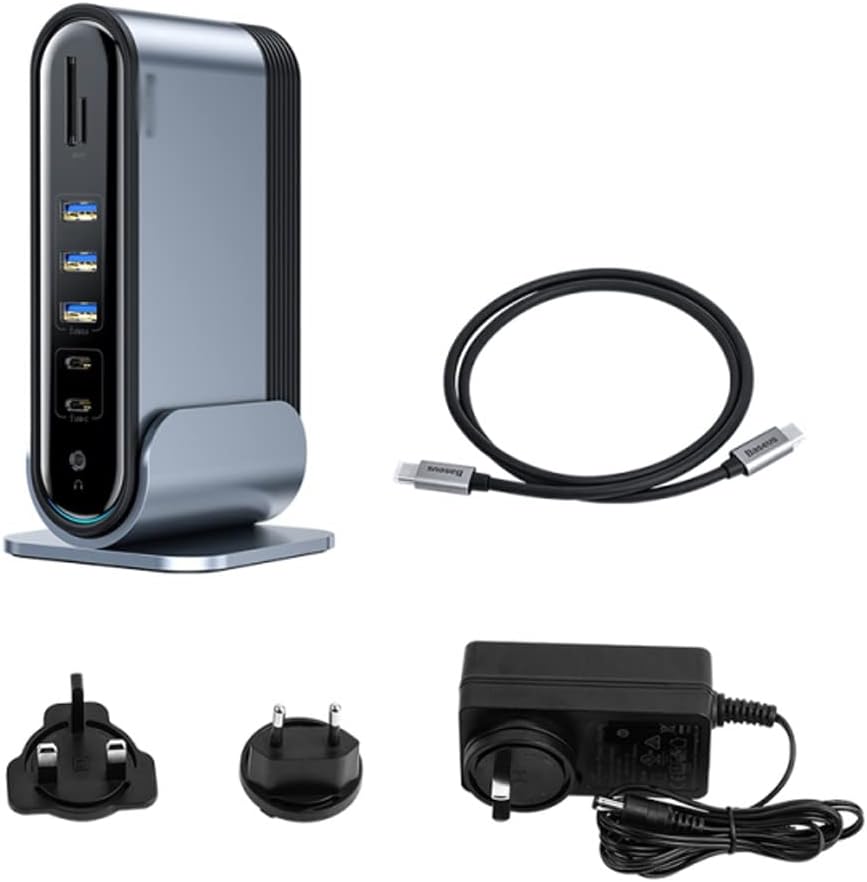
Power Adapter Docking Station Laptop Multifunctional Converter Splitter Accessories: A 2026 Specification Analysis
For professionals, students, and hybrid workers, a cluttered desk and a tangle of cables can hinder productivity. A well-designed docking station aims to solve this by consolidating connections and expanding a laptop's capabilities through a single cable. This analysis examines the specifications and potential of the Power Adapter Docking Station Laptop Multifunctional Converter Splitter Accessories. We will break down its confirmed features, discuss realistic performance expectations, and provide a structured guide to help you determine if this hub aligns with your workflow needs for 2026 and beyond.
Quick Specifications Table
| Specification | Detail |
|---|---|
| Product Type | Multifunctional Docking Station / Converter Hub |
| Primary Function | Laptop Port Expansion & Power Delivery |
| Key Connectivity | Multiple USB ports, HDMI, Ethernet, SD/TF card readers (exact count and versions to be verified) |
| Core Feature | Integrated Power Adapter Passthrough |
| Included Accessories | Power cable, host connection cable (type to be verified) |
| Model Number | To be confirmed from product listing |
Key Features
The core proposition of this multifunctional converter is its integration of a power adapter passthrough with a comprehensive port hub. This design philosophy aims to reduce desk clutter by eliminating the need for a separate laptop charger block. Instead, your laptop's original power adapter plugs into the dock, which then channels power to your laptop while simultaneously providing data connectivity. This creates a single-cable docking solution for both power and peripherals, ideal for a clean desk setup.
Beyond power integration, the hub is specified to offer a range of ports. This multiple USB ports for connecting keyboards, mice, external storage, and other accessories. Video output via HDMI is a standard inclusion for connecting external monitors. An Ethernet port is often provided for a stable, high-speed wired network connection, which is crucial for video calls, large file transfers, and gaming. Integrated card readers for SD and microSD cards also offer convenient file transfer for photographers and content creators.
Design and Build Considerations
As a device that remains permanently on a desk, the build quality and form factor are important. A robust casing can help with heat dissipation during prolonged use with multiple connected devices. The physical layout of the ports is another critical consideration; well-spaced ports allow for all adapters and cables to be connected simultaneously without blocking adjacent slots. The unit's footprint should be compact enough to not dominate the workspace but substantial enough to remain stable when multiple cables are attached.
The integrated power passthrough is a significant design choice. It requires the dock to handle the power throughput efficiently and safely. For the user, it means one less power brick on the desk or in the bag, streamlining the transition between mobile and desktop workstation modes. The host connection to the laptop is a pivotal specification; confirming the exact type and length of this cable is essential for compatibility with your specific laptop model.
Performance Expectations
The performance of a docking station is defined by the stability of its connections and the bandwidth available to its ports. For general productivity tasks—such as word processing, spreadsheet management, video conferencing, and web browsing—a well-implemented hub should provide seamless operation. Connecting standard peripherals like keyboards, mice, and printers should be instantaneous and reliable.
Disclosure: This review may contain affiliate links. As an Amazon Associate, I earn from qualifying purchases—at no extra cost to you.
When using the video output, the supported resolution and refresh rate are key. For office work and media consumption, output supporting 1080p or 1440p resolution at standard refresh rates is typically sufficient. For the Ethernet port, gigabit speeds are expected for fast and reliable network access. Data transfer speeds via the USB ports will be contingent on their generation; USB 3.0 or later ports are appropriate for fast external SSD and HDD transfers. It is important to manage expectations: connecting multiple high-bandwidth devices simultaneously may require prioritisation, as the total bandwidth is shared across the single host connection to the laptop.
Pros and Cons
Based on its stated feature set, here is a balanced look at the potential advantages and limitations of this docking station.
Potential Advantages
- Desk Decluttering: The integrated power passthrough can significantly reduce cable clutter by combining charging and docking into one cable to the laptop.
- Comprehensive Connectivity: Offers a wide array of ports to replace and expand upon a modern laptop's often-limited selection.
- Simplified Workflow: The "one-cable" approach can make docking and undocking the laptop quicker and more convenient.
- Potential for Improved Organisation: Centralises all peripheral connections in one fixed location on the desk.
Potential Limitations
- Bandwidth Sharing: All connected devices share the bandwidth of the single host connection, which could be a bottleneck for multiple high-speed data transfers.
- Power Adapter Dependency: The dock's functionality is tied to using your laptop's specific power adapter, which must be compatible with the passthrough design.
- Laptop Compatibility: Full functionality depends entirely on the host connection type (e.g., USB-C) and your laptop's support for video, data, and power over that connection.
- Fixed Cable: Some designs feature a fixed host cable, which can limit placement options if it is too short or too long.
Comparison with Similar Products
When evaluating this multifunctional converter against other docks on the market, the key differentiator is the integrated power passthrough. Many standard docking stations require you to connect both the dock's data cable and your laptop's separate power charger. This product aims to merge those two cables.
Alternative products may offer a higher port count, specialised ports like DisplayPort or Thunderbolt, or higher power delivery for charging the laptop directly via the dock itself. This model's value proposition is strongest for users who already have a suitable laptop power adapter and prioritise a minimalist, single-cable docking solution above maximum port variety or the latest high-speed data standards. It is a practical choice for creating a efficient home office or workstation setup where the laptop is used with a consistent set of peripherals.
Buying Guide
To determine if this is the right docking solution for you, consider the following questions about your typical use case:
- What is your primary goal? Is it purely to add more ports, or is achieving a single-cable docking experience with power delivery the main objective?
- What peripherals do you use daily? List all devices (monitors, hard drives, keyboard, mouse, webcam, etc.) and match their connection types against the hub's confirmed ports.
- What is your laptop's connection capability? The most critical step is verifying that your laptop has a port (almost certainly USB-C) that supports video output, data transfer, and power input simultaneously. Consult your laptop's manual to confirm this.
- What monitor resolution do you need? Check the product specifications for the maximum supported resolution and refresh rate over HDMI to ensure it meets your monitor's requirements.

Key Things to Verify Before Buying
Always consult the official Amazon product listing for the most accurate and up-to-date information. Pay close attention to the following details before making a purchase decision:
- Exact Port Specification: Confirm the number, type (e.g., USB 3.0, USB 2.0), and version (e.g., HDMI 1.4, 2.0) of every single port on the dock.
- Video Output Support: Verify the maximum supported resolution (e.g., 4K@30Hz, 1080p@60Hz) for the video output port.
- Host Cable Details: Determine the type (USB-C, etc.), length, and whether it is detachable or fixed to the dock.
- Power Adapter Compatibility: Check the supported input power range for the passthrough to ensure your laptop's charger is compatible.
- Warranty and Support: Look for information on the manufacturer's warranty period and available customer support channels.
Frequently Asked Questions
Does this docking station charge my laptop?
This model functions as a power adapter passthrough. It does not generate its own power but allows your laptop's original power adapter to plug into it. The dock then channels that power to your laptop through the data cable. Therefore, charging capability is dependent on your original charger's wattage and the dock's design.
Will it work with my specific laptop brand (e.g., Dell, HP, Lenovo, Apple MacBook)?
Compatibility is determined by the connection type, not the brand. If your laptop has a USB-C port that supports DisplayPort Alt Mode and Power Delivery, it should be compatible for video and power. However, full functionality should be verified against your laptop's specifications. For Apple MacBooks with only USB-C/Thunderbolt ports, compatibility is generally high, but checking the video output specifications against your needs is advised.
Can I connect two external monitors?
Disclosure: This review may contain affiliate links. As an Amazon Associate, I earn from qualifying purchases—at no extra cost to you.
تعليقات
إرسال تعليق